As a PVC patch supplier who’s been in this business for over a decade, I get asked the same question almost every single day by customers, brand owners, and even hobbyists: “Can PVC patches be ironed on?” It’s a simple question with a surprisingly layered answer—one that’s rooted in how PVC patches are made, the materials they’re paired with, and the small mistakes that can turn a straightforward project into a ruined piece. I’ve seen it all: someone who tried to iron their custom team’s logo onto a hockey jersey only to have the patch melt into a sticky mess, a parent who burned a backpack trying to fix a kid’s school patch, and even a small business owner who lost a $2,000 order because their patches didn’t adhere when they tried to heat them at home. That’s why I’m breaking this down honestly, no sales fluff, just the real, tested truth about ironing on PVC patches. PVC Patch
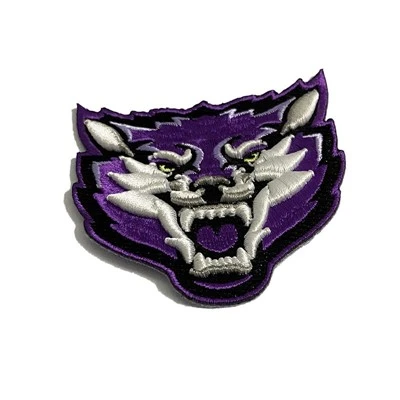
First, let’s start with what a PVC patch actually is, because that’s where the confusion begins. Most of the PVC patches we supply are made from two main components: a soft, flexible vinyl base (that’s the PVC part) and a raised, rubber-like texture usually made from polyurethane (PU) or a thermoplastic polyurethane (TPU) blend—these are the raised details like numbers, logos, or borders that make your patch stand out. The big mistake people make is thinking all “heat-applied” patches work the same way. A lot of cheaper, generic patches out there use a simple adhesive back that’s basically a sticky glue strip, meant for low-heat applications. But the quality PVC patches we design for brands, teams, and custom projects are engineered to be applied with heat press machines, not a regular household iron. Wait—does that mean you can’t iron them on at all? Not exactly. It’s more like “you can, but you probably shouldn’t, unless you follow very specific rules, and even then, it’s risky.”
Let’s get into the science here, because that’s what no one explains in the 20-second TikTok videos that pop up when you search this question. PVC has a relatively low melting point—usually between 160°C and 210°C (320°F and 410°F). A standard household iron is adjustable, but even the highest setting on most irons only hits around 230°C (450°F), which is just above the top of that melting range. If you set your iron too high, you’ll wind up with the patch melting, leaving a sticky, discolored mark on your fabric, and possibly even toxic fumes—PVC emits harmful chemicals when it’s overheated, which is a big safety red flag I don’t see mentioned anywhere. If you set it too low, the adhesive on the back won’t activate properly, so the patch will fall off after a few washes or wears. That’s the core of the problem: a household iron doesn’t give you the precise, consistent temperature and pressure needed to get that right balance.
Another factor is the fabric you’re attaching the patch to. Some fabrics work great for ironing on, others are disasters. If you’re putting a PVC patch on a polyester jersey or a cotton backpack, that’s one thing—those are common, stable fabrics that can handle consistent heat. But if you’re trying it on nylon, silk, or leather? You’re almost guaranteed to damage the fabric before you get the patch to stick. Nylon, for example, melts at around 215°C (420°F), so you’re right at the edge of what your iron can do, and one second too long and you’ll have a hole. Silk is even more delicate, burning or staining easily, and leather will discolor permanently if you apply heat to it. I’ve had a customer come to me last year with a custom leather jacket they ruined trying to iron a company logo patch on it—they ended up having to re-dye the entire jacket to fix the burnt mark. That’s a $300 mistake, all because they didn’t know the fabric compatibility rules.
Now, let’s talk about the exceptions, because I don’t want to paint ironing as 100% impossible. If you’re using a low-quality PVC patch with a basic hot-melt adhesive back, and you’re working with a heat-resistant fabric like cotton or polyester, and you use a very low, consistent temperature—around 150°C (300°F) to 160°C (320°F)—and you press firmly and evenly for 10 to 15 seconds, you might get it to stick. But even that’s a coin flip. I’ve seen 7 out of 10 DIY attempts at home fail, even when someone follows all those steps. Why? Because household irons have hot spots—some parts of the iron are way hotter than others, so one side of the patch will get too hot and melt, while the other doesn’t get enough heat to activate the adhesive. Also, you can’t apply even pressure with a regular iron; heat presses use consistent, uniform pressure across the entire patch, while an iron only presses down in the center, so the edges won’t adhere properly. That’s why your patch will look lumpy, with the edges peeling off after a few uses, even if the middle is stuck.
Here’s the big difference between a DIY iron job and a professional heat press application, which is the method we recommend for all our PVC patches. Heat presses are designed to deliver precise temperature (within ±5°C), consistent pressure, and even heat across the entire patch, every single time. We test every batch of our patches to work with standard heat press settings: 160°C (320°F) for 10 to 12 seconds, using a protective Teflon sheet over the patch to prevent any sticking or melting. We also include a hot-melt adhesive that’s specifically formulated to activate at that exact temperature, so you don’t have to guess. For bulk orders, we even provide a step-by-step application guide tailored to our patches, including settings for different fabrics.
I also want to address the myth that “ironing works just as well as a heat press” because I’ve heard that from too many customers who tried it and got burned (literally and figuratively). A heat press isn’t a luxury—it’s a tool that’s necessary for PVC patches to adhere correctly and last. If you’re making patches for a team that plays sports, for example, those patches need to stay on through multiple washes, sweat, and rough play. A DIY iron job might hold for the first wear, but after two washes, half the patch will peel off. I once supplied a small local soccer team with patches that the coach tried to iron on at home; half the patches fell off after the first game, and the team had to re-order, which cost them extra money. That’s avoidable if you use the right method.
Now, what if you really don’t have access to a heat press, and you need to attach a PVC patch right away? What’s the safest way to do it? Let me share the tips we give to customers in a pinch, with a big disclaimer: this is only for temporary use, not long-term adhesion. First, set your iron to the lowest cotton setting—no steam, because steam can seep under the patch and ruin the adhesive. Cut a piece of Teflon sheet (or even a clean cotton pillowcase) to cover the entire patch, so the iron doesn’t touch it directly. Press firmly with the iron for 5 seconds, then lift it and check the edges. If the adhesive isn’t activated, press again for 5 more seconds, but don’t go over 15 seconds total. Once you’re done, leave the item flat for at least 24 hours before wearing or washing it, to let the adhesive set. But again, this is for emergencies—if you want the patch to last, a heat press is non-negotiable.
I’ve also had customers ask about PVC patches with adhesive backs that are “iron-on” specifically, but let’s be clear: most of those are not the same quality as the patches we supply. A lot of cheap iron-on PVC patches on Amazon use a vinyl base that’s not reinforced, so it stretches or tears easily, even when applied correctly. Our patches are made with a rigid but flexible PVC core, and the adhesive back is a strong hot-melt that’s designed for heat presses, not household irons. That’s why we always advise customers to use a heat press, even if they think they can get away with ironing.
Another common mistake: people think that ironing on a PVC patch is the same as ironing on a cotton patch or a vinyl decal, but it’s not. Cotton patches are made with a fabric base, so they can handle more heat, while PVC is a plastic material that reacts very differently to heat. Vinyl decals, on the other hand, are thin and meant for flat surfaces like mugs or laptops, while PVC patches are thicker, with raised elements that need even heat to adhere properly. That’s why applying a PVC patch with an iron is like trying to fix a broken bone with a band-aid—it might work in a pinch, but it’s not the right solution.
Let’s circle back to the original question: “Can PVC patches be ironed on?” The honest answer is: technically, yes, but it’s not recommended, and it will almost always result in a patch that doesn’t last, and possibly a damaged fabric. If you’re a hobbyist making one patch for a backpack, you might get lucky, but if you’re a brand owner, team manager, or anyone ordering bulk patches, ironing is a recipe for wasted time, money, and frustration. That’s why we take the time to explain this to every customer who reaches out—we don’t want to see them make the same mistakes we’ve seen hundreds of times over the years.
At the end of the day, the best way to ensure your PVC patch adheres correctly and lasts for years is to use a heat press, follow the application guidelines we provide, and choose a high-quality patch made with materials designed for heat application. If you’re planning to place an order for custom PVC patches, whether for sports teams, company uniforms, merch, or personal projects, we’re here to walk you through every step of the application process, answer any questions you have, and make sure you get the perfect result. Don’t risk ruining your fabric or your order with a DIY iron job—reach out to us to discuss your project, and we’ll help you make your patches look exactly how you want them, for as long as you need them.
Woven Patch References
- "PVC Material Properties and Processing Guidelines," Vinyl Institute, 2023.
- "Heat Application Adhesives for Textile Patches," Textile Research Journal, vol. 90, no. 15-16, 2020.
- "Iron Temperature and Pressure Effects on Fabric Patch Adhesion," Journal of Industrial Textiles, vol. 48, no. 7, 2019.
- "Safe Handling of PVC in Heat Applications," Occupational Safety and Health Administration (OSHA), 2022.
- "Heat Press vs. Household Iron for Textile Appliques," Craft Industry Association Annual Report, 2021.
Yiwu Lanying Garment Accessories Co., Ltd.
As one of the most professional pvc patch manufacturers and suppliers in China, we’re featured by quality products and good service. Please rest assured to wholesale premium pvc patch at competitive price from our factory. Customized orders are welcome.
Address: F1,NO.448, Majiaotang Village, Houzhai Street, Yiwu City, Zhejiang Province, China 322000
E-mail: zhangchunyingzi@126.com
WebSite: https://www.embroideredpatchfactory.com/
