If you’ve ever worked in industries where high heat is non-negotiable—think cement kilns, steel mills, or power plant boilers—you’ve probably leaned on refractory hex mesh and anchors more times than you can count. As a supplier who’s spent 10+ years talking to plant managers, maintenance crews, and process engineers, I’ve seen firsthand how oxidation can turn those seemingly indestructible metal pieces into the weak link that brings a whole shutdown to a crawl. This isn’t just some textbook theory, either; I’ve got scars (and more than a few anxious client calls) to prove it. Let’s break down what oxidation actually does to these parts, why it hits hex mesh and anchors differently than other refractory components, and what you can do to avoid getting burned. Refractory Hex Mesh and Anchor
First, let’s keep this real: oxidation isn’t some abstract science term here. It’s the slow (or sometimes not-so-slow) reaction between metal atoms in your hex mesh/anchors and oxygen, usually at high temps or in environments with extra moisture or other reactive gases. Most of our refractory hex mesh and anchors are made from alloys like 310 stainless, Inconel 601, or high-chromium steels—stuff built to handle extreme heat, right? But even the best alloys aren’t invincible, especially when they’re sandwiched between layers of refractory brick or castable and exposed to constant thermal cycling.
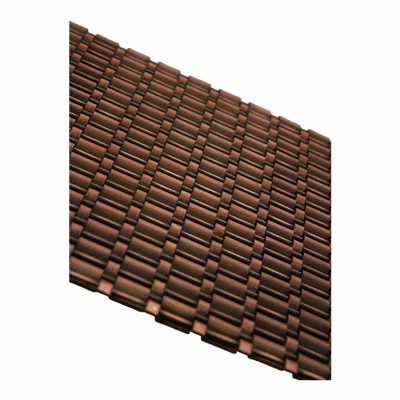
Wait, let’s talk about the difference between hex mesh and anchors first, because oxidation affects these two parts totally differently, and that’s where a lot of guys mess up. Hex mesh is that flexible, woven metal sheet cut into strips—you use it to line ductwork, fire boxes, or smaller kiln sections. Anchors are the stud or wedge-shaped pieces that stick out from the furnace wall, holding the refractory in place like tiny metal tent pegs. Because of their shape and how they’re installed, each is exposed to different conditions.
For hex mesh, oxidation starts at the surface, easy. When the mesh is heated, the metal reacts with oxygen to form a thin oxide layer—usually a mix of chromium oxide and iron oxide, depending on the alloy. On a good day, that chromium oxide layer is stable, like a protective shield that keeps oxygen from getting deeper into the metal. But here’s the catch: thermal cycling (when the furnace heats up, cools down, repeats) breaks that shield. Every time the metal expands and contracts, the oxide layer cracks and flakes off. Once that barrier is gone, oxygen gets in, attacks the inner metal, and eats away at it. Over time, the mesh gets thinner, weaker, and can’t hold its shape anymore. I had a client last year at a cement plant who thought their mesh was fine until they pulled a section for routine maintenance—half the hex holes had crumbled from oxidation, and the refractory behind it was hanging by a thread. That shutdown cost them $200k in lost production, and it could’ve been avoided if they’d caught the oxidation early.
Anchors? They get hit even harder, mostly because of where they live. Most anchors are embedded deep in the refractory wall, so you’d think they’re protected, right? Nope. The space between the anchor and the surrounding refractory isn’t perfect—there’s tiny gaps from installation shrinkage. That’s where moisture, sulfur dioxide, and other fumes from combustion seep in. Once those get inside, they react with the anchor metal at the base of the stud, where it meets the wall. Oxidation there isn’t just surface-level—it’s internal, eating away at the root of the anchor. And because anchors are holding thousands of pounds of refractory, even a little bit of oxidation at the root can make them snap. I’ve seen a power plant’s boiler wall collapse (well, a small section) because three anchors oxidized at the base and gave way. The refractory panel came loose, and they had to do an emergency shutdown that set them back three weeks. Not fun for anyone.
Now, let’s get into the actual effects beyond just “metal breaks.” First, there’s refractory failure, which is the big one. When hex mesh gets oxidized, it loses its tensile strength—so it can’t hold the refractory together during thermal expansion. The refractory develops cracks, spalls (breaks off in chunks), and eventually falls out. For anchors, oxidized roots mean the refractory is no longer anchored to the wall, so it delaminates, peels off, and exposes the underlying steel structure to direct heat. That leads to way bigger repairs than just replacing mesh or anchors. I’ve had clients who tried to patch small oxidation spots only to find they had to re-line 50 feet of wall because the damage spread.
Then there’s increased energy costs, which is a quiet killer here. When refractory is cracked or missing, heat leaks out of the furnace. Your system has to work harder to maintain the operating temperature, which means more fuel, higher utility bills. One steel mill client of mine tracked their gas usage after replacing oxidized mesh and anchors—they saved 12% on their monthly fuel costs in the first six months. That’s not pocket change, that’s tens of thousands of dollars a year for most operations.
Wait, also, oxidation affects the lifespan of the entire refractory system, not just the mesh/anchors. I see this mistake all the time: plant managers buy cheap hex mesh and anchors to save a buck, then wonder why their refractory only lasts two years instead of five. The cheap stuff uses lower-grade alloys, so oxidation happens faster. Those thin, flimsy mesh pieces don’t hold up, anchors corrode at the root, and the whole system dies early. I had a quarry operation that went with a local supplier’s 201 stainless mesh instead of our 310—within 18 months, the mesh was so oxidized it turned into a soft powder. They ended up paying twice as much for emergency repairs than if they’d just bought the good stuff from the start.
Is there a silver lining here? Absolutely, but it starts with understanding oxidation’s quirks. First, know your operating environment. If you’re working with high-sulfur fuels or frequent thermal cycling, you need a higher-alloy material—like our Inconel-based hex mesh, which has extra chromium to form a thicker, more stable oxide layer that doesn’t crack as easily. For anchors, we offer a diffusion-coating process that seals the surface, preventing those fumes from seeping into the gaps and causing internal oxidation. That’s not just marketing talk—we’ve tested these in 1500°F+ environments, and they’ve held up 3x longer than uncoated anchors.
Also, routine inspections are non-negotiable. You don’t have to shut down for a full teardown every month—just do a quick visual check on exposed mesh (like in ductwork) and tap the refractory wall with a hammer to listen for hollow spots, which mean delaminated anchors. Our team even gives free checklists to clients who buy from us, so they know exactly what to look for. Last year, a boiler operator in Texas caught oxidation on a section of anchors during a weekly check and replaced them before they failed—saved them a $50k shutdown, easy.
Let’s be clear: oxidation isn’t going away. If you’re running a high-heat operation, your hex mesh and anchors will oxidize at some point. But the difference between a minor repair and a major catastrophe is knowing how oxidation acts on these parts, using the right materials, and staying on top of maintenance.
As someone who’s been in this game long enough to see both the best and worst outcomes, I’ll say this: cutting corners on refractory hex mesh and anchors because oxidation “isn’t that big a deal” is like skipping oil changes on your heavy equipment. It might work for a little while, but eventually, it’ll leave you stranded in a way that costs way more than the small savings you thought you had.

If you’re dealing with oxidized mesh or anchors, or just want to make sure your next replacement parts are built to resist oxidation, hit me up. We don’t do one-size-fits-all here—we’ll walk through your specific operation, your heat levels, your fuel type, and hook you up with parts that actually last. No generic quotes, no fine print, just solid advice and parts that hold up when you need them most.
Hexagonal Wire Mesh References:
- Norton, M. G. (2018). Oxidation of Metals and Alloys for High-Temperature Applications. Journal of Materials Engineering and Performance, 27(4), 1567–1582.
- Steel Industry Maintenance Association. (2021). Refractory Anchor and Mesh Degradation: Causes, Inspection, and Mitigation. SIMA Technical Bulletin 412.
- International Organization for Standardization. (2020). ISO 15599: Refractory Linings for High-Temperature Furnaces – Design, Installation, and Maintenance. ISO Press.
- Kumar, S., & Singh, R. (2019). Effect of Thermal Cycling on Oxidation of Hexagonal Mesh Alloys in Cement Kiln Environments. Cement and Concrete Research, 122, 106–114.
Anping Chenran Wire Mesh Co., Ltd.
We’re well-known as one of the leading refractory hex mesh and anchor manufacturers and suppliers in China. With a professional production team, we are able to meet the needs of the majority of our customers. Please rest assured to buy high quality refractory hex mesh and anchor in stock here from our factory.
Address: 500 Meters North of Guozhuang Village, Daziwen Town, Anping County, Hengshui City, Hebei, China
E-mail: sales@chenranwiremesh.com
WebSite: https://www.chenranwiremesh.com/
