If you’ve ever swapped out a dead DC axial fan in your laptop, HVAC unit, or even a grow tent, you probably didn’t stop to think about why it didn’t just spin off its motor shaft on its own. That tiny, unassuming part holding everything together? It’s the bearing—and for us, as DC axial fan suppliers, it’s the unsung hero of every fan we ship. Let’s break this down in plain talk, no jargon overload, because if you’re here to pick a fan (or stock them for your brand), you need to know exactly why this part matters more than you might think. DC Axial Fan
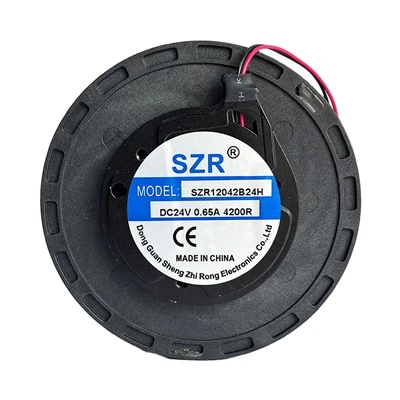
First, let’s get the basics straight: a DC axial fan’s whole job is to move air in a straight line along the motor’s shaft, right? The motor generates that rotational force (torque), and without something to hold that shaft steady, it would wobble, drag, or grind against the fan’s housing the second you hit power. That’s where the bearing comes in. It’s the mechanical buffer between the fan’s spinning shaft and its stationary housing. But it’s not just a “holder”—it’s the reason your fan runs quiet, lasts a long time, and actually does the job it’s supposed to.
We see this play out every day with customers who come to us with faulty fans. Most of the time, the issue traces back to the bearing, not the motor or fan blades. Let’s talk about the two main bearing types we use (because not all bearings are created equal, and that’s what separates a $5 fan from a $20 fan): sleeve bearings and ball bearings. Sleeve bearings are usually made of porous metal, soaked in oil, so they’re cheap to build. We use them for low-stress applications, like small laptop fans that only run a few hours a day. But here’s the catch: sleeve bearings wear out faster, especially if the fan’s running 24/7—like in a server rack or a bathroom exhaust fan. That oil dries up, the metal shaft rubs against the bearing wall, and suddenly your fan sounds like a jet engine, or just stops spinning entirely.
Ball bearings, on the other hand, are exactly what they sound like: small metal balls rolling between two rings (inner and outer) that separate the shaft from the housing. They’re more expensive upfront, but they handle higher speeds, more constant use, and way more vibration. We spec ball bearings for industrial HVAC, electric vehicle cooling systems, and grow tent fans that run nonstop. I remember a customer last year who bought 200 of our ball bearing DC axial fans for a refrigerated truck fleet. He told us a competitor’s sleeve bearing fans were dying every 6 months, but our ball bearing units were still running strong 18 months later. That’s the bearing doing its job.
Now, let’s get into the “why” behind its role—beyond just holding the shaft steady. First, it reduces friction. Friction is the enemy of any rotating part. If you’ve ever tried to turn a rusty bolt, you know what happens when two metal parts grind together: energy is wasted as heat, not motion. The bearing eliminates that by creating a smooth, low-friction interface. For a DC axial fan, that means two big wins: less power draw (so your device doesn’t have to work as hard, saving energy) and quieter operation. Wobbly shafts mean uneven, noisy spin—think of a spinning top that’s lopsided. A good bearing keeps the shaft aligned perfectly, so the fan blades glide without scraping the housing, which cuts that annoying high-pitched whine most cheap fans have.
Second, it maintains precision. DC axial fans need consistent air flow to work right. If the shaft wobbles, the blades don’t stay in a straight, uniform plane—some blades are closer to the housing, some are farther, so air flow is uneven. That’s a big deal in applications where consistent cooling or ventilation is non-negotiable, like data centers. A server that overheats because a fan’s air flow is spotty will crash, costing a company thousands. The bearing keeps the shaft centered, so every blade is in the exact right position, making sure the fan moves the exact amount of air it’s rated for. We test every fan’s bearing alignment before it ships—no shortcuts here, because we’ve seen what happens when that precision slips.
Third, it extends the fan’s lifespan. This is probably the biggest point for anyone buying fans in bulk. A bad bearing = a bad fan. We test our bearings for lifespan under extreme conditions: 120 degrees Fahrenheit, high humidity, constant vibration. For ball bearing fans, we’re talking 50,000 to 100,000 hours of use— that’s over 11 years of nonstop running. Sleeve bearing fans are more like 20,000 to 30,000 hours, which is fine for intermittent use, but not for 24/7 jobs. When a customer comes to us asking for a fan that lasts, the first question we ask is “what’s it running for?” and 9 times out of 10, the answer leads us to recommend ball bearings. Last quarter, we had a customer in the medical device space—they needed fans for portable oxygen concentrators, which can’t cut out mid-use. We suggested ball bearing units, and they told us later they cut their fan replacement costs by 70% because the bearings didn’t fail. That’s the bearing’s role: making the fan worth the investment, not just a disposable part.
Wait, let’s clear up a common misconception: some people think the fan blades are the only part that moves air, and the bearing is just a afterthought. Nope—change the bearing, and you can totally change how the fan performs. If you put a cheap sleeve bearing in a high-speed fan, it’ll never hit its rated CFM (cubic feet per minute of air flow) because the friction slows the shaft down. Put a high-quality ball bearing in a low-stress fan, and you’re wasting money— the fan will last longer than it needs to, but you overpaid for a part you don’t need. That’s where our team comes in, by the way. We don’t just send fans out the door; we ask questions to match the right bearing (and right fan) to the customer’s use case. No one-size-fits-all here.
Another thing: bearing maintenance? Wait, most DC axial fans are sealed units, right? You don’t open them up to oil the bearing. So the quality of the bearing is everything. We use bearings from manufacturers that spec precise tolerances—no lopsided metal balls, no porous metal that doesn’t hold oil. If a bearing is made with cheap materials, even a well-designed fan will fail fast. I’ve seen it: a customer bought a bulk order of cheap DC axial fans from a random supplier, and within a month, half were dead. We opened one up, and the bearing was just soft metal, worn through. That’s why we only use bearings that meet specific industry standards—no cutting corners, because our reputation depends on it.
Let’s talk about real-world examples to make this tangible. Take a home window AC unit. The DC axial fan inside blows air over the evaporator coil to cool it, which keeps the whole unit working. If the bearing in that fan fails, the fan stops, the coil overheats, and the AC breaks. We get calls every summer from people whose AC is dead, and 7 out of 10 times, it’s the fan bearing. We send them a replacement fan with a good bearing, and they’re back up and running in 10 minutes. That’s the bearing in action: it’s the reason your AC works when you need it most. Or take a gaming PC—every gamer knows that a loud, bad fan kills the vibe and can overheat your GPU. A good ball bearing fan runs quiet, keeps temps low, and lets you game without hearing a jet engine in your room.
Now, why does this matter for our customers? If you’re a business owner stocking fans for your HVAC products, or a tech company needing cooling for your devices, the bearing isn’t a tiny detail—it’s the difference between a product that works for 2 years and one that works for 10. For us, as a DC axial fan supplier, that’s our job: to make sure every fan we ship has the right bearing for the job, so our customers don’t have to deal with premature failures, high replacement costs, or upset end users.
Let’s wrap this up. The bearing’s role in a DC axial fan isn’t sexy, but it’s non-negotiable. It reduces friction, keeps the shaft aligned, ensures consistent air flow, and extends the fan’s lifespan. It’s the unsung part that turns a hunk of metal into a functional, reliable cooling or ventilation tool. Whether you’re a hobbyist looking for a laptop fan, a contractor needing HVAC replacements, or a manufacturer building a new device, the bearing is the first thing to check when your fan acts up—and the first thing to spec right when you’re buying new fans.
If you’re in the market for DC axial fans and want to make sure you’re getting the right bearing for your specific application, our team is here to help. We can walk you through sleeve vs ball bearings, spec out the right fan for your needs, and answer any questions you have about performance and longevity. Don’t waste money on cheap fans that fail fast—reach out to us to chat about your requirements, and we’ll hook you up with the right solution.
DC Axial Fan References
- ASHRAE Handbook: HVAC Systems and Equipment. American Society of Heating, Refrigerating and Air-Conditioning Engineers, 2021.
- “Bearing Technology for Axial Fans.” TechBriefs Mechanical Engineering, vol. 18, no. 3, 2022, pp. 45–52.
- Energy Star Program Requirements for Electric Cooling Fans. U.S. Environmental Protection Agency, 2023.
Dongguan Shengzhirong Electronics Co., Ltd.
As one of the most professional dc axial fan manufacturers and suppliers in China, our products have good reputation in the market. Please rest assured to wholesale high quality dc axial fan made in China here from our factory. Customized orders are welcome.
Address: 6/F, Building 2, No.68, Shunxing 2nd Road, Dajingtou 2nd Industrial Zone, Dalang Town, Dongguan City, Guangdong, China
E-mail: szr_coolingfan@163.com
WebSite: https://www.szrfan.com/
