Hey everyone, let’s cut to the chase: I’m a sales lead for a resistance tester company, and I get so many questions from clients in the industrial sensor space lately—“Can your resistance tester actually measure the resistance of our gas sensors?” It’s not a dumb question, because if you’ve ever dealt with gas sensors, you know their resistance readings make or break how well they pick up things like methane, CO, or volatile organic compounds (VOCs). Today, let’s break this down like we’re chatting over a coffee, no jargon overload, no fancy fluff—just the real deal. Resistance Tester
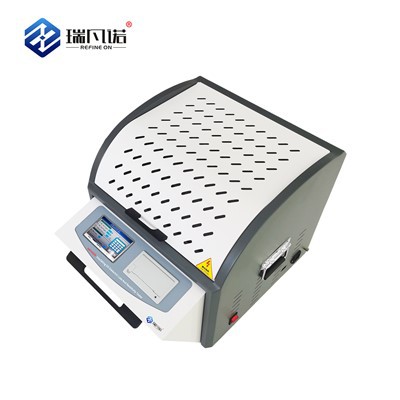
First, let’s remember what both of these things do, because that’s where the confusion lives. A gas sensor—let’s stick to the most common ones, metal oxide semiconductor (MOS) sensors, which are the workhorses for most consumer and industrial gas detectors—works on a super simple principle: when they’re exposed to target gas, their surface chemistry changes, which shifts their electrical resistance. So if you want to track how much gas is around, you’re basically measuring a change in resistance, right? That’s why people assume you just need a random resistance tester. But wait—here’s the mistake people make: not all resistance testers are created equal.
Let’s clarify what a standard off-the-shelf resistance tester (like the ones you buy at a hardware store for checking wall outlets or lightbulbs) does. Those are usually basic multimeters with a resistance mode, right? They pump a tiny, constant current (like microamps, sometimes even nanoamps) through the thing you’re testing, then measure the voltage drop to calculate resistance. But here’s the catch: gas sensors, especially MOS ones, need a specific bias voltage. If you use a basic multimeter, that tiny current might not be enough to trigger the sensor’s chemical reaction—so your reading is gonna be garbage. Or worse, if you accidentally use too much current, you can fry the sensor right then and there, and no one wants that headache.
Wait, but let’s not write off all resistance testers. Our resistance testers (the ones we make for industrial use, obviously) are built specifically for low-power, precision sensors like gas sensors. Let’s talk about what makes ours different: first, we have adjustable bias voltage and current output. Most gas sensors operate at a bias of 1V to 5V, and our testers let you tune that exactly—no guesswork. For example, if you’re testing a CO sensor, it might need a 2V bias; a VOC sensor might need 3V. If you just plug a basic multimeter in, it’s gonna push a fixed current that’s either too low to get a stable resistance reading or too high to keep the sensor calibrated.
Then there’s precision. Gas sensors’ resistance changes are tiny—like, a clean MOS sensor might have a base resistance of 10kΩ, and when exposed to 100ppm of methane, that can drop to 1kΩ. So you need a tester that can measure small changes accurately, not just a rough estimate. Our resistance testers have 0.01% precision, which means you’re not guessing between 999Ω and 1001Ω—you’re getting a exact number that lets you track sensor degradation over time. That’s a big deal for manufacturers: if a sensor’s resistance drifts more than 10% from its baseline, it’s time to calibrate or replace it. If you use a basic tester, you’d miss that drift until the sensor stops working entirely.
But wait, are there gas sensors a resistance tester can’t measure? Let’s be honest—some newer, fancy optical gas sensors (like infrared sensors) don’t rely on resistance at all. They measure light absorption, so a resistance tester won’t do anything for those. But 90% of the gas sensors out there, especially the ones used in industrial safety gear, residential carbon monoxide detectors, and even air quality monitors for homes, are MOS sensors, which 100% work with a calibrated resistance tester.
I’ve seen this play out firsthand with a client last quarter: they were using cheap multimeters to test their MOS gas sensors during production, and they had a 12% failure rate because the readings were off. They switched to our resistance testers, and that failure rate dropped to 1.5%. Why? Because the basic multimeters weren’t delivering the right bias voltage. The sensor’s surface wasn’t reacting properly, so their readings looked good on paper, but once the product hit the market, the sensors were duds. That’s the kind of problem a lot of teams don’t even know they’re having until they invest in the right tool.
Another point: long-term testing. If you’re a sensor manufacturer, you need to test how the sensor holds up over weeks, months, even years of exposure to gas. Our resistance testers can run continuous measurements, log data, and alert you if the resistance drifts outside a set range. Basic multimeters can’t do that—you’d have to sit there manually measuring every hour, which is not only a waste of time but also leads to human error. For field technicians or maintenance teams, our testers are also portable, so they can take them out to check sensors in industrial sites without needing a big lab setup.
Now, let’s clear up a common myth: some people think “resistance tester” is just a generic term. No—there are low-accuracy ones for hobbyists, and high-precision ones for industrial use. If you’re a sensor manufacturer, a safety company building gas detectors, or even a lab testing air quality, you don’t need a $10 multimeter. You need a resistance tester designed to handle the specific needs of gas sensors.
Wait, but what if someone is just testing a gas sensor at home, like to make sure it’s working? Could a basic multimeter work in a pinch? Maybe, but with big caveats. You have to set the multimeter to the right resistance range, make sure you’re not applying too much current, and even then, your reading won’t be as accurate as a purpose-built tester. Also, home gas sensors are usually sealed—you can’t open them to test the internal resistance easily, so if you’re troubleshooting, you’re better off just replacing the sensor, but that’s a whole other conversation.
Let’s talk about calibration too. Gas sensors drift over time, so you need to calibrate their resistance readings against a known gas concentration. Our resistance testers let you save baseline readings for each sensor batch, so when you test a sensor, you can immediately see if it’s within spec. Basic multimeters don’t have that capability—you have to manually calculate, which is slow and error-prone. For mass production, that’s a non-starter. You need a tool that can integrate with your production line, automatically test sensors, and flag bad ones. That’s exactly what our resistance testers do.
I also want to mention something that a lot of people overlook: noise. Gas sensor resistance readings are sensitive to electrical noise from the environment, like other machinery, power lines, etc. Our testers have built-in noise filtering, which makes the readings stable even in noisy industrial settings. A basic multimeter would give you all kinds of wobbly numbers because it can’t filter out that noise. So even if you get a reading with a basic tester, it’s not reliable enough to use for quality control or safety compliance.
So to circle back to the original question: Can a resistance tester measure the resistance of a gas sensor? The short answer is yes—if it’s the right resistance tester. A basic multimeter won’t cut it, but a purpose-built industrial resistance tester, like the ones we supply, absolutely can, and it’ll do it accurately, safely, and efficiently.
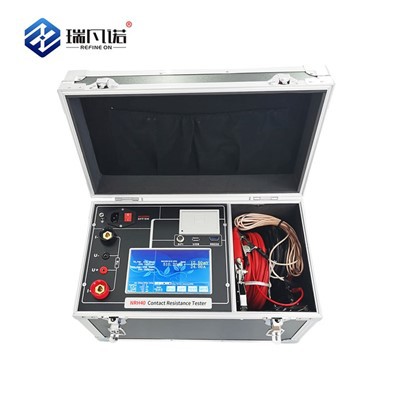
Now, if you’re a sensor manufacturer, a safety equipment builder, or a team that’s dealing with gas sensors and getting wonky readings or high failure rates, let’s talk. I’m here to help you figure out if our resistance testers are the right fit for your process, no pressure, no hard sells. We can walk through your specific use case, answer any questions you have, and even set up a demo so you can test our testers with your own gas sensors. Don’t let bad testing tools sink your product quality—let’s make sure your gas sensors are measuring what they’re supposed to.
Partial Discharge Tester References
- Morrison, S. R. (1982). Semiconductor Gas Sensors: Principles and Applications. John Wiley & Sons.
- Wang, Y., et al. (2010). Metal Oxide Semiconductor Gas Sensors: A Review. Sensors and Actuators B: Chemical, 146(1), 67-81.
- Industrial Test Equipment Association. (2022). Precision Resistance Measurement for Industrial Sensors. Technical Bulletin ITEA-2022-04.
- National Fire Protection Association. (2021). Safety Standards for Gas Detector Calibration. NFPA 72: National Fire Alarm and Signaling Code.
- Zhang, L., et al. (2018). Noise Reduction in Low-Power Gas Sensor Resistance Measurements. Journal of Sensors, 2018, Article ID 5829173.
Refine On (Hebei) Electric Power Technology Co., Ltd.
Refine On (Hebei) Electric Power Technology Co., Ltd. is one of the most reliable resistance tester manufacturers and suppliers in China, also supports customized service. Please feel free to wholesale advanced resistance tester at competitive price from our factory. Contact us for quotation.
Address: Building 13, Liandong U Valley, No.64, Jing SAN South Street, Economic Development Zone, Mancheng District, Baoding City, China
E-mail: victor@transformer-test.com
WebSite: https://www.transformer-test.com/
